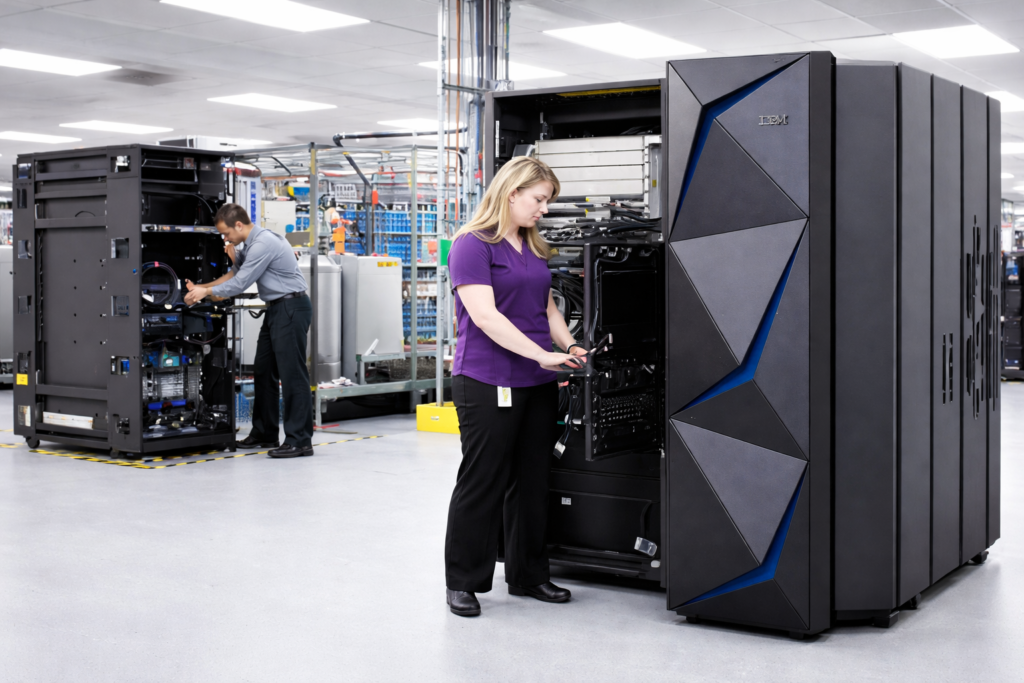
From financial institutions and government agencies to healthcare systems and multinational corporations, mainframe technology continues to power mission critical operations. While modern innovations often capture headlines, the stability and processing strength of mainframe architecture remain unmatched for high volume transaction environments.
This article explores NS Mainframe in depth, including its architecture, key features, enterprise applications, benefits, modernization strategies, and future relevance in the evolving technology landscape.
Understanding NS Mainframe Technology
A mainframe is a high performance computing system built to process vast amounts of data quickly and securely. NS Mainframe refers to a next generation approach to traditional mainframe computing that integrates advanced processing capabilities, virtualization, security protocols, and scalable infrastructure.
Unlike personal computers or small servers, mainframes are designed for:
-
High volume transaction processing
-
Large scale database management
-
Enterprise resource planning
-
Secure financial operations
-
Continuous uptime requirements
Mainframe systems prioritize stability, reliability, and efficiency. They are engineered to operate without interruption, often achieving near perfect availability.
The Evolution of Mainframe Computing
Mainframe technology has existed for decades, but it has evolved significantly. Early systems were massive physical machines used by governments and large enterprises. Over time, advancements in hardware design, processing power, and software integration transformed mainframes into highly sophisticated platforms.
Modern NS Mainframe systems incorporate:
-
Advanced multi core processors
-
High speed memory architecture
-
Virtualization capabilities
-
Cloud integration support
-
Artificial intelligence optimization
This evolution ensures that mainframes remain relevant in the digital transformation era.
Core Features of NS Mainframe
1. Exceptional Processing Power
NS Mainframe systems are designed to handle millions of transactions per second. Financial institutions rely on this processing capability for banking transactions, stock trading systems, and payment processing networks.
High throughput ensures that businesses can scale operations without performance bottlenecks.
2. Enterprise Grade Security
Security is a defining strength of mainframe technology. Built in encryption, access control mechanisms, and data protection protocols safeguard sensitive information.
Industries such as banking and healthcare depend on these security features to comply with regulatory standards and protect customer data.
3. Scalability and Flexibility
NS Mainframe architecture supports scalable computing. Organizations can expand processing capacity without disrupting operations.
Virtualization technologies allow multiple applications and operating systems to run simultaneously on a single mainframe system, improving resource utilization.
4. High Availability and Reliability
Downtime can be extremely costly for enterprises. Mainframe systems are engineered for continuous operation with minimal interruption.
Redundant components, automatic fault detection, and self healing capabilities contribute to near constant uptime.
5. Advanced Data Management
Mainframes excel at managing large scale databases. They support structured and unstructured data processing, making them ideal for complex enterprise environments.
Enterprise Applications of NS Mainframe
Mainframe technology remains central to several industries.
Banking and Financial Services
Banks process millions of daily transactions. NS Mainframe systems ensure:
-
Real time transaction processing
-
Fraud detection
-
Secure customer data management
-
High speed payment settlements
Financial stability depends on consistent performance, which mainframes provide.
Government and Public Sector
Government agencies use mainframes to manage national databases, tax systems, identification records, and public services.
The reliability and security of mainframes are essential for handling sensitive citizen information.
Healthcare Systems
Hospitals and healthcare providers rely on mainframe infrastructure to manage patient records, billing systems, and insurance processing.
Data integrity and confidentiality are critical in healthcare environments.
Retail and E Commerce
Large retailers process vast volumes of sales transactions daily. Mainframes support inventory systems, payment processing, and supply chain management.
High availability ensures uninterrupted customer experiences.
Mainframe and Cloud Integration
One common misconception is that mainframes are outdated compared to cloud computing. In reality, modern NS Mainframe systems integrate seamlessly with cloud platforms.
Hybrid IT environments combine:
-
On premises mainframe infrastructure
-
Public cloud services
-
Private cloud solutions
-
Containerized applications
This integration allows enterprises to leverage cloud flexibility while maintaining core operations on secure mainframe systems.
Mainframes often serve as the foundation of hybrid cloud strategies.
Modernization of NS Mainframe Systems
As digital transformation accelerates, organizations are modernizing their mainframe environments.
Modernization strategies include:
-
API integration with web applications
-
DevOps practices for faster deployment
-
Microservices architecture
-
User interface modernization
-
Automation tools
These upgrades enhance agility while preserving core system stability.
Mainframe modernization does not mean replacement. It means evolution.
Security Advantages of NS Mainframe
Cybersecurity threats continue to rise. Mainframes offer multiple layers of protection, including:
-
Hardware level encryption
-
Secure boot processes
-
Role based access control
-
Real time threat monitoring
Centralized data storage reduces exposure to distributed attack surfaces.
In industries where data breaches can cause severe financial and reputational damage, mainframe security provides reassurance.
The Role of Automation and Artificial Intelligence
Artificial intelligence enhances mainframe performance through predictive analytics and automated workload management.
Automation enables:
-
System performance monitoring
-
Error detection
-
Resource allocation optimization
-
Predictive maintenance
These capabilities improve operational efficiency and reduce human error.
Mainframe in the Era of Big Data
Big data analytics requires high processing capacity. Mainframes can handle complex data queries and large scale analytics workloads efficiently.
By integrating with analytics platforms, NS Mainframe systems support real time insights for decision making.
Organizations leverage this power for:
-
Customer behavior analysis
-
Fraud detection models
-
Market forecasting
-
Operational optimization
Data driven strategies depend on robust infrastructure.
Career Opportunities in Mainframe Technology
Despite assumptions about obsolescence, demand for mainframe professionals remains strong.
Career roles include:
-
Mainframe system administrator
-
Database manager
-
Security specialist
-
Application developer
-
DevOps engineer
As enterprises continue relying on mainframe systems, skilled professionals enjoy stable career opportunities.
The Future of NS Mainframe
The future of mainframe computing lies in adaptability. Rather than competing with cloud technology, mainframes complement it.
Emerging trends include:
-
AI driven workload optimization
-
Blockchain integration
-
Enhanced cybersecurity frameworks
-
Hybrid cloud expansion
-
Real time analytics platforms
Mainframes are evolving to support digital transformation strategies.
As long as enterprises require secure, high volume transaction processing, mainframe systems will remain indispensable.
Why NS Mainframe Still Matters
Technology evolves rapidly, but reliability and performance remain constant priorities.
NS Mainframe matters because it delivers:
-
Consistent uptime
-
Massive processing power
-
Secure data management
-
Scalable enterprise infrastructure
-
Seamless integration with modern technologies
In a world where downtime can cost millions and data breaches can damage trust, dependable systems form the backbone of business continuity.
Final Thoughts
NS Mainframe represents more than a legacy computing platform. It stands as a symbol of stability in an era of rapid technological change. While new innovations capture attention, the strength of enterprise computing often depends on systems that quietly and efficiently power global operations.
Modern mainframes integrate with cloud platforms, support artificial intelligence, and enable big data analytics. They provide unmatched reliability and security for industries that cannot afford disruption.
As digital transformation continues, the role of mainframe technology will not disappear. Instead, it will adapt, integrate, and evolve alongside emerging technologies.
Organizations that understand the strategic value of NS Mainframe can build resilient, secure, and scalable IT infrastructures prepared for the future.
In enterprise computing, true innovation often builds upon a strong foundation. NS Mainframe remains one of the strongest foundations in the technology landscape today.